

Every call review starts with one thing: a recording. If a conversation isn't recorded, nobody can check it, coach on it, or use it to settle a dispute with a customer. The FCA's rules on recording haven't changed in years, but its recent work shows firms still struggle to keep conversations on the record.
Who the recording rules apply to
The FCA's recording rules sit in a part of its Handbook called SYSC 10A. They cover firms doing investment business, such as dealing in investments, arranging deals in investments and managing investments.
Many consumer finance, insurance and debt firms aren't covered by SYSC 10A. But the lesson applies to any firm that sells or advises by phone. In September 2026 the FCA's debt advice warning listed pressure to agree a deal over the phone or WhatsApp as a red flag. Conversations that slip off the record are where poor practice hides.
What the FCA expects: Market Watch 66
In January 2021 the FCA set out its expectations in a newsletter called Market Watch 66. It was written as homeworking grew, and it still stands.
- Homeworking raises the risk. Staff working from home may use apps such as WhatsApp that the firm can't monitor.
- Record what's in scope. Firms must take reasonable steps to record in-scope calls and keep copies of electronic messages, including the conversations that lead up to a deal.
- Approve new channels first. No new way of talking to customers should be used until the firm can record it.
- Train staff whenever policies or technology change.
The FCA doesn't ban particular apps. It expects firms to meet the recording rules, whatever they use.
What the FCA found in 2025
In August 2025 the FCA published a review of how 11 wholesale banks handle off-channel communications: conversations that happen outside the recorded channels a firm allows.
- 8 of the 11 firms reported breaches of their own policies in the previous 12 months, 178 in total.
- 131 of those breaches came from just 3 firms. 3 firms reported none.
- 41% of breaches involved staff at director level or above.
The FCA warned that a high number of breaches can mean good detection, and a low number doesn't prove the controls work.
The better firms updated their monitoring to spot staff switching from a recorded channel to an unrecorded one. Some used language tools and AI to cut false alerts. Two noticed when staff used the approved apps far less than their peers, a sign they might be talking somewhere else.
The review also had a warning about suppliers. One transcription service a firm relied on was largely inaccurate. The FCA reminded firms that they can't hand their responsibility to a third party.

Book a 30-minute demo and see your recorded calls reviewed against your own standards.
Book a demoTeams calls: pressing record isn't enough
More firms now take customer calls through Microsoft Teams rather than a traditional phone system. A recent article in FinTech Global, based on a blog by the recording supplier Wordwatch, sets out why that matters.
Teams has two kinds of recording:
- Recording a user starts themselves. It's designed for meeting notes and is saved to the user's own storage.
- Compliance recording. It's switched on centrally by administrators, users can't turn it off, and it runs through a certified partner.
For firms under the recording rules, only the second is built for regulated calls. Picture an adviser who presses record on a Teams call with a customer. The file lands in the adviser's own storage, where it could be deleted or never found again. That's not a record anyone can rely on.
The article also notes that under MiFID II, recordings must be kept unaltered and produced on request, normally for five years, and regulators can extend that to seven.
What this means for your firm
- Know which conversations must be recorded, and write it down.
- Check how each channel is recorded, including Teams and mobiles, and who can switch recording off.
- Listen for the move off the record. "Drop me a message on WhatsApp" on a recorded call is worth a flag.
- Check your suppliers. Spot-check transcripts against the recording.
- Track breaches over time, not just the count. Who, which channel, and is it getting better?
- Lead from the top. The FCA found senior staff among the worst offenders.
A conversation off the record is a conversation nobody can check.
How Converc helps
Converc reviews the calls you record, so recording comes first. Converc is not a compliance recorder; your firm stays responsible for recording and keeping calls.
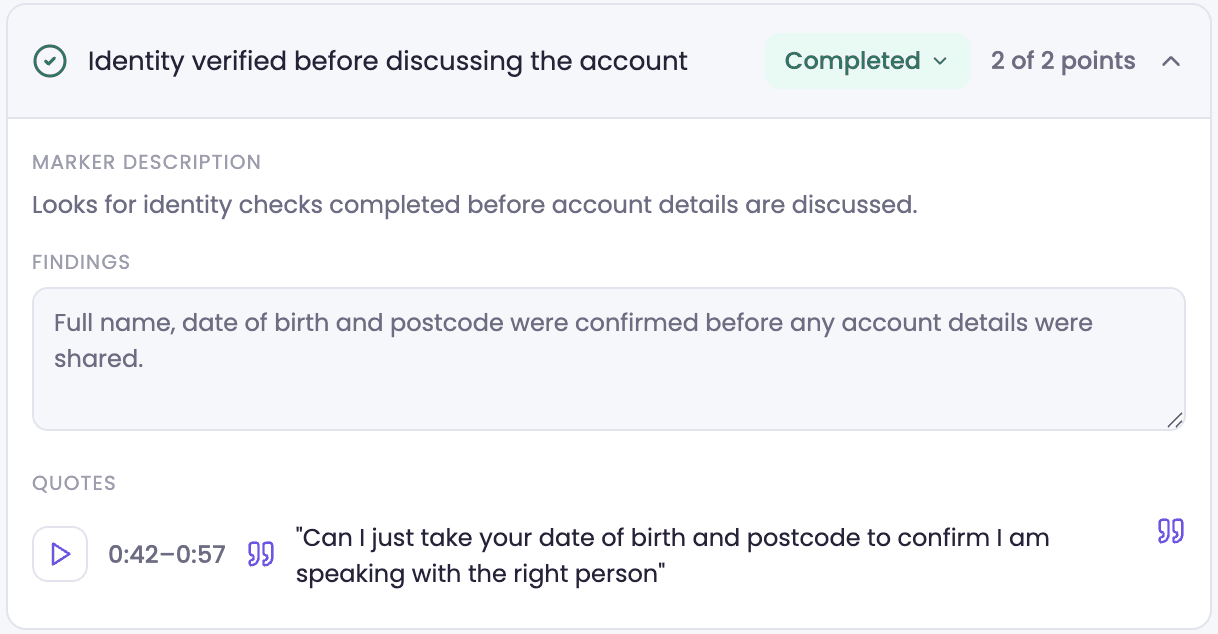
Once a call is in, Converc judges it against your scorecard and backs each judgement with a quote, so your reviewers can check it against the recording. Your firm can add its own marker for advisers who try to move customers onto unrecorded channels, and track it by adviser over time. Your people make the final decision on every call, as the FCA expects.
Sources
- FCA: Market Watch 66 — 11 January 2021
- FCA: Multi-firm review into off-channel communications — 7 August 2025
- FCA: Debt advice warning: spot the red flags — 22 September 2026
- FinTech Global: Teams Phone recording: where native capture fails MiFID II — 5 October 2026
This article is general information, not compliance advice. · Last checked 22 October 2026

Written by the team that builds Converc, drawing on work with compliance, QA and training leads across regulated UK firms.