
The FCA has finished the first year of its five-year strategy, and in July it published its annual report. Read alongside its enforcement and support work since, three messages stand out for firms that talk to customers by phone.
The regulator is using data and AI to spot problems faster. It is holding individuals to account. And it is backing firms that build strong controls early.
The year at a glance
| What | Figure | Period |
|---|---|---|
| Estimated benefit to consumers, firms and the economy | £5.6bn | First year of the strategy |
| Saving on monthly insurance premiums from Consumer Duty fair-value rules | About £157m a year | Ongoing |
| Warnings about unauthorised or possible scam firms | 2,329 | 2025 |
| Criminal convictions secured | 17 | First year of the strategy |
| Time to handle simpler cases, after AI automation | From up to 4 hours to about 6 minutes | First year of the strategy |
| Applications to the FCA's AI sandbox | 132 | First year of the strategy |
1. The regulator is getting faster
The FCA says it is using more data and technology to find harm earlier. AI now handles its simpler cases in minutes rather than hours. Its Firm Checker tool, which lets consumers check whether a firm is authorised, has been used more than 1.9 million times since January 2025.
It also led an international week of action against unlicensed "finfluencers" with nine other regulators. That led to 3 arrests and 650 requests to take down social media posts.
The point for firms is simple. The regulator can now look at more, faster. A firm that checks only a small sample of its calls by hand may struggle to keep pace with what the regulator can see.
2. The Consumer Duty is producing results
The annual report gives the Consumer Duty credit for real savings. Using the Duty's fair-value rules, the FCA estimates people paying monthly insurance premiums now save around £157m a year.
It also clarified mortgage affordability checks, so most lenders changed their approach and some borrowers can access up to £30,000 more. And it confirmed rules for Buy Now Pay Later products ahead of that regime starting in July 2026.
For phone teams, the message is that the Duty isn't a box-ticking exercise. The FCA measures it by what customers actually get, and much of that is decided in conversations.

Book a 30-minute demo and we'll review a sample of your calls against your own standards.
Book a demo3. Individuals are being held to account
In September 2026 the FCA said it had decided to ban Daniel Thomas from financial services and fine him £742,700. It found he advised 53 clients on 63 transfers out of defined benefit pensions over five years, without the qualifications needed. It also found he misled clients and pension providers about his qualifications, and destroyed client records.
Mr Thomas has referred the decision to the Upper Tribunal, so these findings are provisional. The FCA has made no findings against the firm that oversaw his business.
Two lessons apply to any firm. First, records protect customers and the firm, and losing them is treated seriously. Second, his firm was an appointed representative, overseen by a larger principal firm. Principals need to see what is actually said to customers, not just what they are told.
The regulator can now see more, faster. Your own monitoring needs to keep up.
4. Strong controls are rewarded
In August 2026 five fast-growing firms joined the FCA's Scale-up Unit, which gives tailored regulatory support: ClearScore, Modulr, Teya, Urban Jungle and Zilch.
The FCA also published lessons from a pilot with 15 high-growth firms. The message was clear: firms that invest early in governance, risk management and controls grow more safely. Since launching its innovation services, the FCA says it has supported more than 1,000 firms.
What this means for your firm
- Expect the regulator to see more. Your own monitoring should keep up with what it can see.
- Measure outcomes, not activity. The Duty is judged on what customers get.
- Keep complete records of what was said to customers, and keep them safe.
- If you oversee other firms or advisers, check their calls, not just their reports.
- Build controls before you grow, not after.
How Converc helps
Converc is priced per minute of call, with no subscription, so reviewing more calls doesn't mean hiring more reviewers. Every judgement is backed by a quote from the call, and the record of how each result was reached is kept, so you can explain any score later.
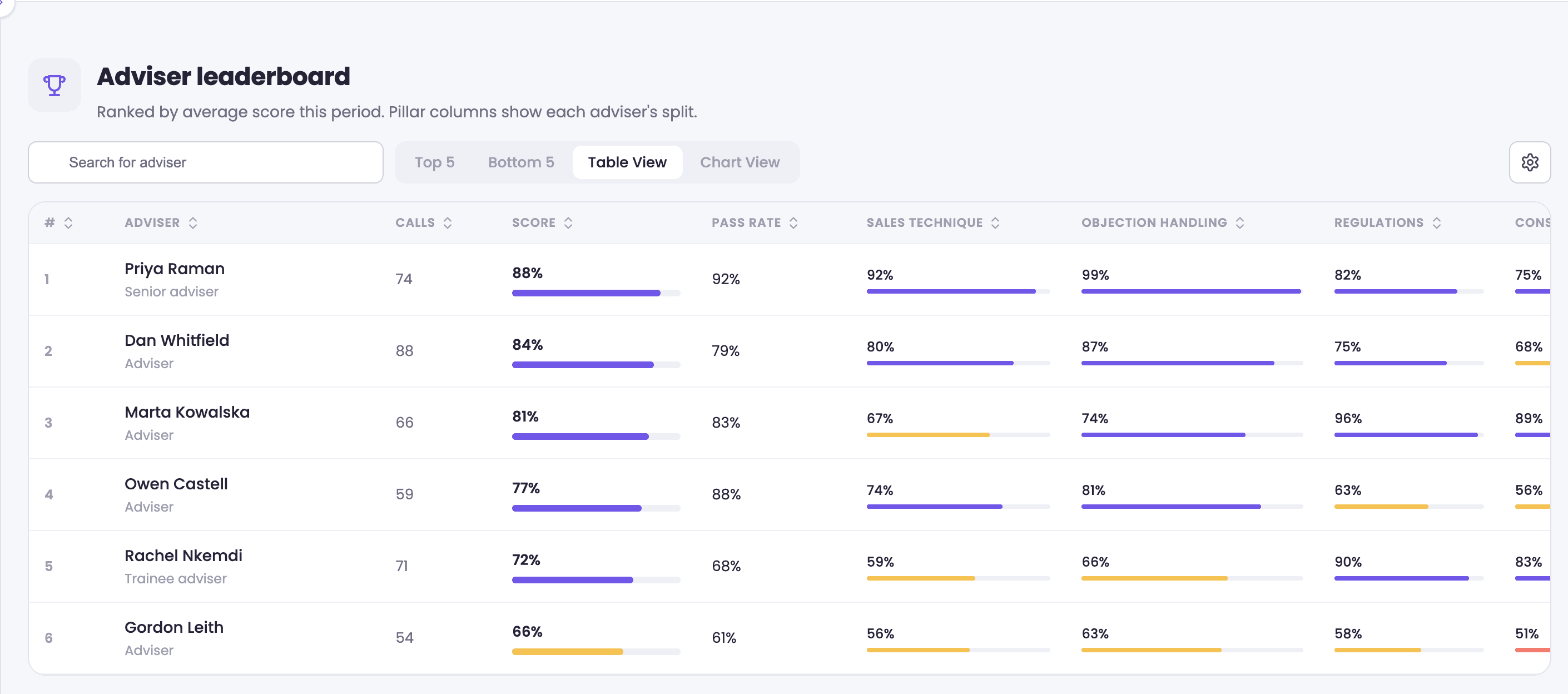
Results are shown by adviser over time, so you can see who needs support before a small problem becomes a pattern.
Sources
This article is general information, not compliance advice. · Last checked 22 October 2026

Written by the team that builds Converc, drawing on work with compliance, QA and training leads across regulated UK firms.