Every sales team lives by its conversion rate. It's simple, it's easy to count, and it tells you who closes. But in July 2026 the FCA named it as a weak spot in how some firms check they are treating customers well. For sales leaders in regulated firms, that's worth understanding, because it changes what a good sales month looks like.
What the FCA said
The FCA published a review of how firms monitor customer outcomes under the Consumer Duty. It looked at board reports and surveyed 56 firms.
One weakness it found: some firms used activity measures, such as conversion rates, as a stand-in for customer outcomes. They hadn't defined what a good or poor outcome looked like at each stage of the customer journey, so they couldn't tell whether a sale was a good one.
The stronger firms did three things differently:
- They defined good outcomes at each stage, from first contact to after the sale.
- They combined several measures, such as complaints, customers leaving, feedback and call checks, rather than relying on one number.
- They set targets and reviewed them, raising the bar when results improved.
Why conversion can mislead
Picture two advisers, both converting 30% of their calls.
The first explains the options clearly, checks the customer understands, and doesn't push. Her customers stay, and rarely complain.
The second rushes customers, talks over their questions, and nudges their answers to fit the product. His customers cancel, complain, or end up with something that doesn't suit them.
On a sales report, they look identical. Only the calls show the difference.
The FCA's September 2026 debt advice warning shows where this ends. It described customers being pressured, coached on their answers, and steered towards fee-paying solutions. Every one of those sales would have counted as a conversion.

Book a 30-minute demo and we'll review a sample of your sales calls against your own standards.
Book a demoKeep conversion, but don't measure it alone
This isn't an argument to stop tracking conversion. A firm that doesn't sell doesn't survive. The point is to read it alongside measures that show how the sale was made.
| Measure | What it tells you | What it can miss |
|---|---|---|
| Conversion rate | Who closes | How they closed |
| Cancellations soon after the sale | Customers who changed their mind | Why they changed it |
| Complaints | When something went wrong | Customers who never complain |
| Call standards met | Whether advisers did what you expect, call by call | Nothing, if every call is checked |
| Vulnerability handled well | Whether customers who needed support got it | Signs nobody listened for |
A lesson from where customers come from
The FCA's review included an example every sales leader should note. One firm tested data on the applicants it turned down, to see whether its sales channels were reaching the right customers. It found that some channels sent a high share of unsuitable applicants, without enough income or savings. The firm ended two paid affiliate relationships as a result.
Volume from a source isn't value if those customers can't be served well.
A sale the customer didn't understand isn't a win. It's a complaint that hasn't arrived yet.
Good technique and good outcomes go together
Strong sales technique isn't the enemy of good outcomes. Building rapport, finding out what the customer needs, handling objections honestly and summarising clearly before the close all make sales more likely and customers better served.
Pressure and coaching aren't technique. They're shortcuts, and the FCA is listening for them.
What this means for your team
- Keep conversion, but never on its own. Put call standards next to it on every report.
- Define a good call at each stage: opening, fact-find, recommendation and close.
- Look for high conversion with low standards. That adviser needs coaching first.
- Coach from evidence. Use the actual moment in the call, not a general note.
- Check the quality of your lead sources, not just the volume.
How Converc helps
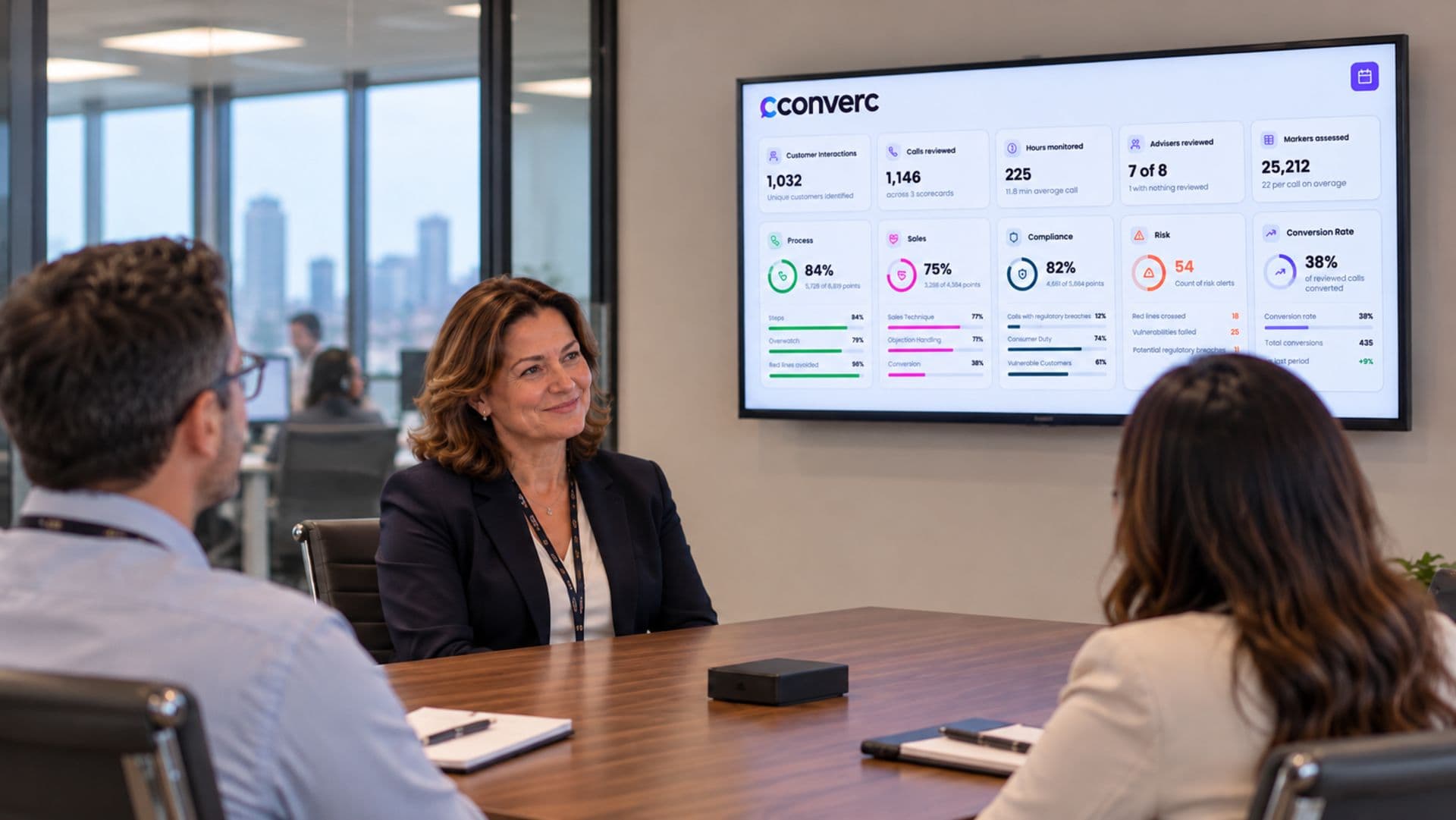
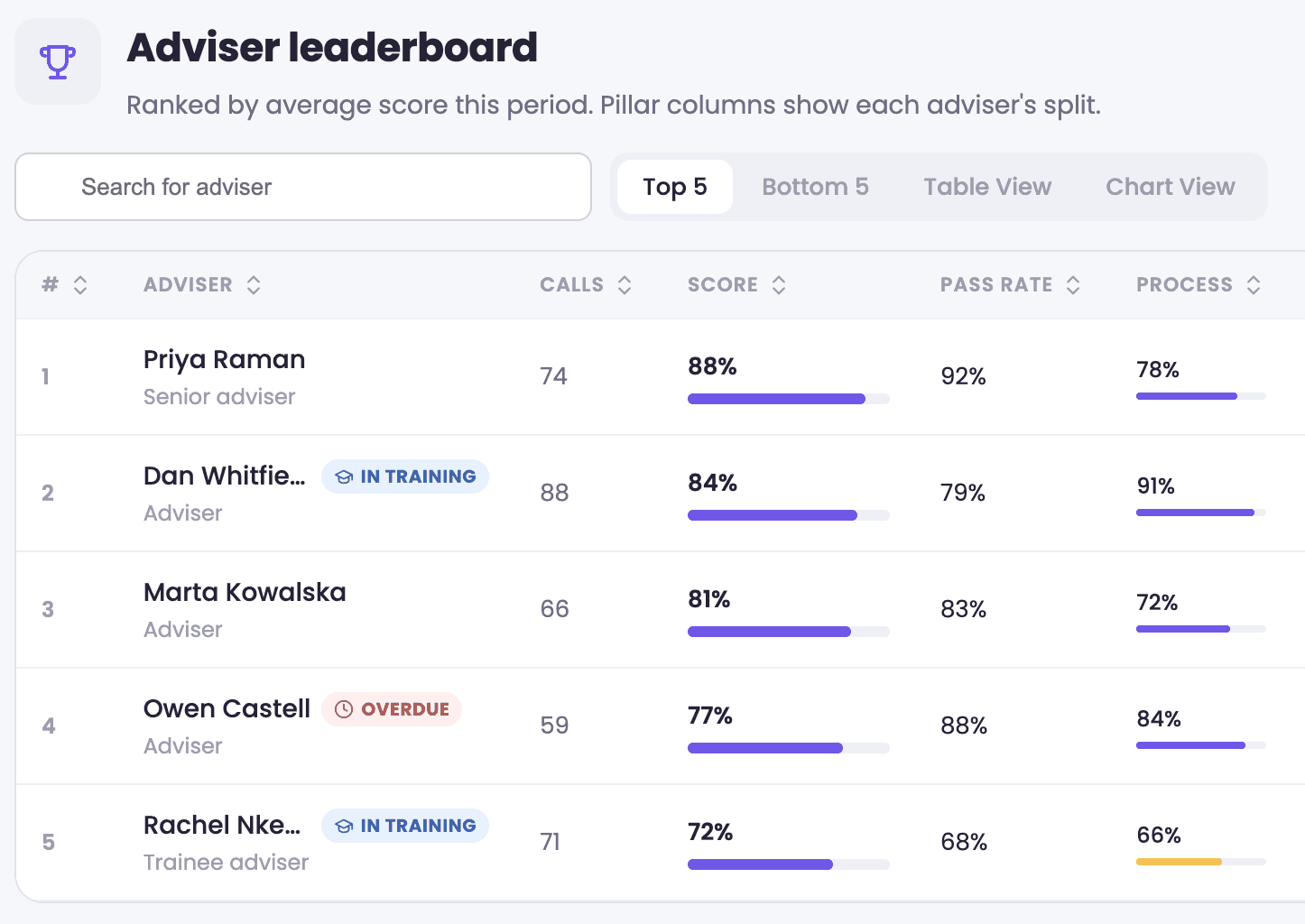
Every Converc scorecard has a conversion marker: whether the call closed. It's tracked as insight with no points, so a sale can never make a poor call look good. Sales technique is judged separately: how the adviser moved the call forward.
That lets you see, side by side, who closes, how they close, and whether customers were treated fairly. Advisers who need work can practise in drills and AI voice simulators before their next live call.
Sources
- FCA: Outcomes monitoring: good practice and areas for improvement — 27 July 2026
- FCA: Debt advice warning: spot the red flags — 22 September 2026
This article is general information, not compliance advice. · Last checked 22 October 2026
Written by the team that builds Converc, drawing on work with compliance, QA and training leads across regulated UK firms.